NAEP Technology Assessment 2012

I’ve just found out I’m going to be part of the National Assessment of Educational Progress (NAEP) Technology Assessment development (see the E-school News story: On the way: Nation’s first tech-literacy exam: Tech literacy to be added to Nation’s Report Card beginning in 2012).

The recent NAEP developed assessments for science and math have generally been well received, and I’m looking forward to being a part of the effort to create something similar for technology literacy. Of course I’m curious to see how this will play out, since technology literacy is not a subject or a discipline like math or science.

I’m hoping that part of the solution will be to increase opportunities for students to study real engineering, design and programming in K-12. My background as an electrical engineer is no doubt part of that hope.

There are two committees working on these frameworks, a steering committee and a planning committee. I’m on the planning committee. The first meeting is next week in Washington, DC, and I’ll know a lot more after that. One question I will definitely ask is how transparent the process will be. The last NAEP assessment planning was done before blogs became as ubiquitous as they are now. The eschool news story says there will be public input and hearings, and an extensive review process. Let’s hope this extends out as far as the net reaches.

Update – I’ve been asked to remove the names of the committee members for now…

Stay tuned! – Sylvia

Heavy-handed filtering is a problem, not a solution

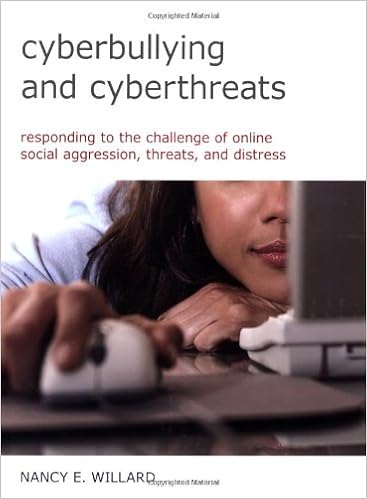
I recently saw an email on the WWWEDU listserve by Nancy Willard, executive director of the Center for Safe and Responsible Internet Use, that I thought really needed to be shared. Nancy has given me permission to reproduce it here. Nancy is one of the sanest and smartest voices regarding youth and online safety. Her latest book on Cyberbullying (available at Amazon) is a must read for parents and teachers. I really respect her knowledge on this subject and feel that her approach, based on real data and work with real kids is far superior to the current climate of fear and scare tactics surrounding education in an online world.

In this email, Nancy answers questions about filtering and school responsibility for online safety.  If you are an educator dealing with unreasonable filtering that hampers your ability to teach, I urge you to explore her website and buy her books.

We must use knowledge, not fear, as our guide to face the opportunities and dangers of the 21st Century.

Sylvia

—————– The rest of this post is all Nancy —————–

We will NOT be able to effectively prepare students for their education, career, and civic responsibilities in the 21st Century if the technical services directors in schools throughout this country continue their heavy handed filtering.

It is essential to shift how the Internet is being managed from a primary reliance on filtering to more effective monitoring – in an environment where education – not social – use of the Internet is expected, and supported with effective professional and curriculum development.

Q: Dear Nancy, does the law specifically state how tight the filter has to be set. Do we have to set it at its most restrictive setting can’t it be at its least restrictive setting?
A: All you have to do under CIPA is set it to block pornographic material – obscene material and material harmful for minors. There is NO liability for schools if they choose not to set it to block an area and something “inappropriate” happens to appear on that site. The CIPA regulations mentioned the understanding that filtering is not perfect.

There is absolutely NO justification under CIPA for the heavy-handed filtering that is preventing effective instruction in schools today. The problem is that schools are overly reliant on filtering when they should be shifting to more of a focus on monitoring.

The other problem is the non-research-based fear-mongering about internet risk. Just about everything you hear in the press – or from politicians – about online sexual predators is not supported by the research data.

They are not targeting children. They are not tracking down teens based on personal contact information they post. 1 in 5 or 7 young people has not been contacted by a predator. There are not 50,000 predators online at any given time prowling for victims. There are legitimate concerns of adults who are preying on emotionally vulnerable or “seeking” teens. But the arrest rates for sexual abuse of minors have actually been going down in the last decade.

Q: Our district (actually most of the state) went to web washer and we are even more restricted now than we were before.
A: No one at the filtering companies is held accountable for the decisions that are being made. 8e6 has a close relationship with the American Family Association!!! Think of the objections if the American Family Association was the organization deciding what books would be allowed in schools. No one knows what biases the other companies might have.

It is OUTRAGEOUS that tech directors and administrators would think that these companies are better at selecting sites for their appropriateness than librarians and teachers!

Q: The person setting the filter is not an educator but an IT tech with little or no classroom experience.
A: This is a major concern. The people who are making content based decisions on what categories should be blocked should be the librarians and curriculum specialists. The IT folks should be involved only on decisions related to security and bandwidth issues.

Further EVERY librarian and ed tech specialist in the schools should have the authority to override the filter and provide access to a site that has been inappropriately blocked – based on the educational determination of its content!

Further, EVERY counselor, administrator, and school resource officer, should also have the ability to override to investigate online material that presents safety of student well-being concerns. (And they may need some help from more tech savvy folks to be able to do this.)

I am working on professional development resources to address both youth risk online and effective Internet use management for a Web 2.0 World. Should be available January. These will be narrated slides presentations with reproducible handouts – with CLE credit available.

Nancy Willard, M.S., J.D.
Center for Safe and Responsible Internet Use
http://www.embracecivility.org/
http://cyberbully.org

Cyberbullying and Cyberthreats: Responding to the Challenge of Online Social Aggression, Threats, and Distress (Amazon)

Cyber-Safe Kids, Cyber-Savvy Teens: Helping Young People Learn to Use the Internet Safely and Responsibly (Jossey-Bass) (also at Amazon)

SaveSave
There’s still time for Student Speak Up

Speak Up BannerJust a reminder, Speak Up 2008 is going on through Dec 18, 2008.

Since inception, Speak Up, the national online research project facilitated by Project Tomorrow, has collected the viewpoints of over 1.2 million students, educators and parents on key educational issues and shared them with local and national policy makers.

This is your opportunity to have your students, teachers, administrators and parents participate in the local and national dialogue about key educational topics including: technology use, 21st century schools, science and media/information literacy.

For registration information, click here.

Constructing Modern Math/Science Knowledge 2009

Ever question why technology seems to have gone missing in so many math and science classrooms? What happened to the “compute” in computing? Wondering what STEM really looks like?

Yes, technology, math, and science can be friends!

Constructing Modern Knowledge is organizing a one-of-a-kind educational event for January 22, 2009 at Philadelphia’s Science Leadership Academy. Constructing Modern Math/Science Knowledge is a minds-on institute for K-12 teachers, administrators and technology coordinators looking for practical and inspirational ways to use computers to enhance S.T.E.M. learning. Constructing Modern Math/Science Knowledge is a pre-conference event for Educon 2.1, an innovative conference and conversation about the future of education.

The presenters represent high-tech pioneers and seasoned veterans at the forefront of innovation in math, science and computing. Read more about them here.

Come to Constructing Modern Math/Science Knowledge and stay for Educon 2.1!

  • Early-bird registration (before December 15) – $100
  • Regular registration – $130

You may register for both Constructing Modern Math/Science Knowledge and Educon 2.1 with one click.

Sylvia

G1G1 now on for Australia

Good news for One Laptop Per Child (OLPC) XO laptop fans in Australia – The program has gotten the permissions necessary to ship XO laptops to Australia. Check the OLPC Australian wiki for details.

See my other posts on the XO laptop:

Sylvia

Virtual worlds interactive timeline

Anyone interested in Virtual Worlds will enjoy this interactive timeline. It covers over 200 years of immersive and simulated worlds in fiction, art, and technology, starting with the panorama picture “…invented by Robert Baker and patented in 1787 as “La Nature a coup d’Oeil”.

I can’t vouch for the veracity of every piece of information here, but I didn’t notice anything obviously missing or wrong. Pretty cool to stroll back through memory lane… anyone remember The Palace?

Sylvia

Free – Projects, portfolios and more for creative educators

Last week I mentioned the article What Makes a Good Project? Eight elements to great project design by Gary Stager in the Creative Educator magazine.

I hope you had a chance to look at the whole Creative Educator magazine, because it’s great. It’s published twice a year by Tech4Learning, publisher of creativity software for K-12 schools

The Creative Educator is fully available online, and in addition to the project article, this month’s issue has some great articles.

  • Universal design – tales from a 4th grade classroom about using software that includes ALL students
  • Bloom and Marzano for the 21st century
  • Digital Storytelling
  • Portfolios – and an interview with Helen Barrett, a pioneer and thought-leader of the digital portfolio movement
  • Lessons and ideas from classroom teachers using creativity software to enhance learning

The articles are all online, and every issue can be downloaded as a PDF.


Research supporting service-learning

Yesterday I blogged about a crisis (or opportunity) for service-learning in schools.

This is based on a new report Community Service and Service-Learning in America’s Schools by the Corporation for National & Community Service.

In a nutshell, the report confirms a decade long decline in more formal, curriculum based service-learning. However, it also shows a recent slight upward trend in school support for youth doing community service work.

But here’s why the decline in service-learning is worrisome. From the report’s summary:

Research confirms that service-learning is a strong vehicle for enhancing and deepening the learning experience to improve both civic and academic behaviors. Service-learning can also diminish “risky behavior” and behavioral problems at school and help students develop social confidence and skills. While community service also has positive impacts on students, service-learning offers a much more substantial service experience through structured activities that give youth leadership roles and connect the activities to reflection and learning.

“Schools across America have rallied around community service and they are to be applauded,” said Dr. Robert Grimm, the Corporation’s Director of Research and Policy. “But research shows that service-learning offers more meaningful service opportunities for students and has numerous impacts on both students’ civic and academic success. Service helps learning come alive. It is time to put learning back into service.”

Other key findings of the study include:

  • The majority of school districts do not provide service-learning policies, according to school principals. Only 19 percent of school principals report that their districts have a policy that promotes service-learning, and 28 percent of principals do not know whether their district has such a policy.
  • Elementary schools are the least likely to offer service-learning activities. 20 percent of elementary schools have service-learning programs, compared to a quarter of middle schools and over a third (35%) of high schools. Furthermore, over half (51%) of elementary school principals believe their students are too young to engage in service-learning.
  • The class gap in service learning is decreasing but still exists. Schools in low-income areas are significantly less likely to have service-learning activities than other schools. In 1999, schools in low-income areas were 36 percent less likely to have service-learning activities; in 2008 they were only 26 percent less likely to offer service-learning. Still, only 20 percent of schools in low-income areas currently offer service-learning activities compared to 27 percent of schools that are not in low-income areas.

More research from Learn & Serve America on the Impact of Service-Learning:
Research studies of service-learning, an educational method that intentionally connects community service to classroom learning, demonstrate that service-learning programs can have positive impacts on youth in three general areas: academic engagement and achievement; civic attitudes and behaviors; and social and personal skills. The studies also demonstrate that students gain the maximum benefit when their service-learning experience includes a direct tie to the curriculum, planning and design of service projects by students, structured reflection on the service experience in the classroom, and continuity of service for at least one semester. This issue brief offers some of the most compelling evidence to date on how service-learning positively affects youth. Issue Brief on “The Impact of Service-Learning: A Review of Current Research” (PDF)

Sylvia

Subscribe to the Generation YES Blog

Should your school participate in the XO G1G1 program?

One Laptop per Child: Give 1 Get 1Thinking about creating a school program around the One Laptop Per Child XO laptop computer? At the recent NEIT 2008 conference (see my post, The people in the room are the right people), several schools were thinking along these lines. Would the Give One, Get One (G1G1) project be a perfect holiday project, raising funds for something that would help the poorest children in the world, and potentially benefit the school as well?

For example, if a school raised $2,000, that would be enough money to purchase ten XO laptops. The school would get five, and five children somewhere in the world would get the others.

As we talked about the options, there were some good ideas for using the XOs that I’d like to share.

  • “field trip” computers for recording audio, video and notes
  • start a computer club where students participate in the XO community
  • have them in the library for check out
  • use them in lower grade levels

At the end of the day, it’s really up to the school and how involved they want to get. Even something as small  as promoting the program as an option for gift giving with a global purpose is worth doing.

Here are some questions that came up, with the answers if we could figure them out from the XO site.

Q: How does the XO compare to other small, inexpensive laptops on the market?
Its different!A: There are technical details on the Amazon XO site and even more on the OLPC wiki. However, my contention is that for most Americans, unless you are willing to buy-in to the XO learning principles and participate in the grand global experiment, the XO is not for you. If you are choosing a laptop simply on technical specifications or price, I’d suggest passing on the XO. (My checklist of “what not to expect” when you get an XO.)

Q: If my school participates in the G1G1 program, do we find out who gets the “other” laptops?
A: As far as we could find out, that is not possible. This isn’t like and “adopt a child” program, you don’t get a letter telling you who gets the computer. However, you can find a lot of stories about what kids are doing with their XO laptops around the world on the XO wiki. I imagine that it would be fairly easy to find a school somewhere to establish a “pen pal” relationship with. Also, with the Give Many program, if you donate enough money to purchase more than 100 XOs you can have your donation go to a particular country.

Q: Should we tell parents to do this and get a laptop for their child for home use?
A: If you do, you need to manage expectations for parents. These computers are not just cheap laptops or expensive Leapfrogs. Most parents will not be expecting to have to do their own tech support, system updates, or learn a new operating system. Again, see my checklist of “what not to expect” when you get an XO for some suggestions of what you do and don’t get with the XO.)

Q: We have lots of computers, we don’t need more. Can we just donate money?
A: According to the XO site, you can simply donate money in any amount. You can also just purchase one laptop that goes directly for donation for $199.

Q: Does it come with Windows?
A: There have been recent news reports about the XO being able to dual boot Sugar (the operating system designed for it) and Windows. The laptops purchased through the G1G1 program will NOT have Windows installed.

Q: Does it come with a hand crank?
A: No, that was just an early prototype that seems to have caught a lot of people’s imagination. It comes with a regular AC power adapter.

Q: Should we do the G1G1 program and then donate the computers to a nearby, needier school?
Only if the school wants them. These XOs are different than other computers and will need special maintenance and care. Some schools have created “exchange” programs, where students provide support and training for other schools. If you are willing to create such a long-term relationship, this might be an extraordinary learning experience for your students.

Q: How long is the G1G1 program running? Holidays are too busy, but we could do something in the spring.
A: This is one question we couldn’t find a really solid answer to. The OLPC wiki says it will be an ongoing program, and that “While the promotion has no scheduled end date, the advertising will run from Nov 17 to Dec 26, to take advantage of the holiday giving season.” However, much of the news about G1G1 has stated that the program ends Dec. 31, 2008. There is an open question on the “talk” page of the OLPC wiki about this, but no one has responded yet. It’s possible that people are also confusing last year’s program which ran for a limited time.

My inclination would be to trust the OLPC wiki and assume that Amazon is committed to this for the long term… but keep checking back!

Sylvia