Educational technology conferences happen all the time all over the country. There’s probably one going on every day of the year! At each of these conferences, the organizers look for interesting speakers and presentations that will excite the attendees. Where do these presenters come from? It’s no secret – THEY are YOU!
Steve Dembo of the Discovery Educator’s Network just wrote a blog post, You know you’re a rock star… Now prove it! that contains a handy list of all the state educational technology conferences and links to their session submission pages.
The problem is that many teachers don’t believe they are rock stars. I hear this all the time, ...oh, I’m just a teacher… lil ol’ me? ….. I just do my own thing in my classroom and no one even notices down the hall! Why would anyone else care?
Really now people, and especially you GenYES and TechYES teachers out there – you are doing some terrific, interesting things that other people want to hear about and understand better. You can’t fool me! I hear your stories all the time, and what you do is just as amazing as most conference sessions out there. The only difference is that the people presenting sessions have screwed up their courage and decided to share.
Putting forward good examples of student-centered learning and explaining how that happens is everyone’s job. Otherwise, people just assume it’s magic. So — why do you care about student empowerment? What does that look like? How do you create project-based experiences in this age of accountability? What is it you DO that creates the environment where students don’t just perform – they blossom?
Speaking at a conference is not “tooting your own horn”, it’s not egocentric, and it’s not just to get fame and fortune. Believe me, it’s not about fame and fortune! Actually, you can think of it as part of your professional development — it’s a balanced part of being an educator, doing reflective work about your own practice. OK, it’s scary to get up in front of people and talk, but for goodness sakes – you do this for a living! And how can a conference audience be any more scary than a gaggle of 14 year olds after gym class?
And now I’m going to up the stakes even more – take your students along on the adventure. If what you do in the classroom is meant to enable student voice and to empower students to own their own learning, let them take that experience outside the classroom. Let your students show others what it means to be a 21st century learner. Education conferences are becoming more open to student presenters, and really, it’s not that hard.
To help, I’ve written a how-to guide about taking students to conferences. It’s called, Sharing Student Voice: Students Presenting at Conferences. The focus is on making it an enriching experience for students AND also meeting the needs of the adult audience. It starts with how to propose sessions with students, goes through planning and preparation, and includes a handy Top 10 Tips for student presentations.
For three days this summer, science teachers from 12 Brooklyn middle schools came together to plan an innovative program combining science, engineering and technology. With our TechYES Science program as the key, teachers learned how to use Lego Robotics and LCSI’s Microworlds EX Robotics software with their students to build, program, and learn hands-on science.
This fall, these teachers will go back to their schools and lead students in the exploration of science and engineering as they build projects that show technology literacy. Using the TechYES Science materials, student projects will be assessed to meet the national ISTE technology literacy standards, and meet the NCLB 8th grade technology literacy mandate.
The workshop, led by Gary Stager and Dennis Harper, was ably assisted by Janine Maletsky and Jeff Conor (a former GenYES student and currently a first year teacher in Brooklyn).
I recently was fortunate to watch the great math educator Constance Kamii leading professional development with teachers, many of them new. Dr. Kamii is the author of many articles and books about math education for young children. She studied for 15 years under Jean Piaget, and currently teaches teachers at the University of Alabama.
Her focus is teaching math to young children, and her constructivist approach runs counter to most mainstream math instruction found in US schools today. Her research with real children in real classrooms is impeccable and widely cited, her video casework is undeniable, and she’s read and studied worldwide – especially in Japan and Brazil.
The big idea of this post – questioning assumptions
Dr. Kamii makes me question everything I think I know about math and how children learn. What I do know is that the way that most children are taught math here in the US is successful for far too few people. But people seem to feel that it’s the only way. Here in the US, it’s perfectly acceptable to say, “I’m not good at math” and acknowledge that fractions mystify most college freshmen. Yet still we cling to our beliefs that somehow, if we just keep reciting times tables, handing out more worksheets, and doing “math minutes”, eventually, the kids will get it.
It seems obvious to me that we have to question assumptions about teaching and learning math — especially in the face of overwhelming evidence that something is very very wrong.
What follows is my understanding of what Dr. Kamii shared with these teachers about teaching math to young children. These are not direct quotes, and I hope I got the gist of what she meant while discussing a complex subject.
Starting off – memory, perception, and representation
Dr. Kamii started with some basic thoughts about memory, perception, and representation.
In young children, memory is a reconstruction of their understanding. It’s not a storage/retrieval mechanism. So for math, kids at a lower level of number concept will have a hard time remembering “facts”.
Perception is a personal construction of what’s out there, so it will change as a child grows.
Representation when talking about how children learn math is not the same as using the word “represent” as in a metaphor. The mind represents things – it’s a verb. The nature of representation is not fully understood, but if you work with children, and listen and watch them, you can see when these understandings happen. Teachers have to carefully watch how children represent their understanding of the world, and with math in particular, and be careful not to try to simply impose an outside representation on a child.
You can’t force them. If a child has no number sense, and you introduce numbers, there is no perception in the mind to connect it to. You can try to make them memorize it and practice it, but that just delays what needs to happen and confuses children.
By telling a child how to solve problems and memorize facts, we are trying to shortcut a developmental process that just can’t be shortcut – and in the end, will actually delay progress and make it less likely that they will develop the deeper understanding they will need for lifelong mathematical ability.
Too much emphasis on symbols and equations
Kamii feels that in most traditional classrooms there is too much emphasis on writing equations. She teaches that there should be very limited exposure to equations in early grades.
Introducing symbols too early creates confusion where children feel the way to solve a problem is to choose the right symbol. Children may come to kindergarten able to answer questions like “If you have two apples and I take away one, how many do you have?” — but after a few months will respond, “Do I plus or minus?”
Many teachers try to “help” children with word problems by providing them with decoding strategies. For example, they tell children to look for certain words that signal the operation they are supposed to use to solve the problem — if you see the word “more” you add, if you see the word “per” you divide. This unfortunately encourages children to not really try to understand the problem, and often adds to a child’s uncertainty of “what to do.” Instead of thinking, they guess.
Throughout the day, the teachers are asking questions, about how do you know what to do, how do you see these signs in children. Stephanie, who runs the school, says – it takes years to get from the place where you say, “this might be right” to the place where you say, “I know how to teach like this.” She assures them that everyone will be working together all year long to make sense of this.
Subtraction is not backwards addition
Dr. Kamii moves on to addition and subtraction. First, she talks about how most math education moves through these stages – add, subtract, multiply, divide. However, she says, this is not a natural progression. Subtraction is not a natural follow on to addition — multiplication is. But not as in “memorize the times tables” kind of multiplication. The kind of natural multiplication that students will do as they become more confident with addition. Things like creating groups, counting by fives, etc.
Example: Even as adults, people don’t normally express things in terms of subtraction. When you go somewhere, you say you are getting closer to your goal, you don’t say you are getting further away from your starting point.
If you are not successful in addition, you can’t move on to subtraction. Conversely, if kids know addition very well, they will move easily to subtraction. Dr. Kamii says, “I wouldn’t bother teaching subtraction in first grade.”
Other points she makes:
Don’t teach kids to count backwards to subtract. Too hard to keep track of the first count. (10-3 = 10, 9, 8…is the answer 8?). Similarly, number lines can be very confusing.
Manipulatives should not be used, it’s an abstraction of an abstraction. Let students draw their own representations of a problem.
One of the worst things to teach is to “count on” (which means that teachers encourage students to add by saying the first number, and “counting” out the second number.) The problem is that it’s a trick and not natural for kids. For example, if you watch kids play games where they move a game piece by counting, they always try to count the square they are on as part of their move.
When it’s time to move to bigger numbers, the issue of “borrowing” comes up. If kids are introduced to this concept too early, they believe that borrowing creates a number that is bigger than original number. But some kids will be able to do the borrowing trick without understanding what the place value means. It looks like they are catching on, but they are just mimicking the trick. You have to constantly test their understanding by talking to them about real problems that use numbers.
So what do you do instead?
Her methods are to use a constant supply of word problems and games, not worksheets. She plays some games with the teachers and shows them several articles and books she has written about games and puzzles. She shows them assessment strategies that seem like games to students but reveal various types of mathematical sense in children.
Games that assess number sense
Word problems are crucial, she says. But let children solve them their own way, without imposing symbols or pre-canned strategies. They should work both together and in groups, and the class can discuss the solutions together. Children should be allowed to talk through their solutions to the group and will often come to see their own errors in ways that are much better learning experiences than just being told “you’re wrong”. (More about this later.)
The teacher’s job should be to move the group discussion along and try not to impose their own understandings and ways to solve problems on any student. It’s very important for every child to feel that there are multiple ways to solve a problem (not necessarily multiple solutions) and they are free to express their own solution. That way, if they have a logical flaw in their thinking, they will often hear it as they try to explain it to the class.
The teachers chime in
Some of the teachers are now bringing up their experiences from previous years. That it’s hard to get the parents to understand this teaching methodology. The teachers say that parents teach algorithms and tricks to kids, and when this happens, it shows up right away that the kids are less willing to tackle problems because they feel they don’t know the right trick. A teacher tells a story about having to help kids when they have been messed up by memorizing algorithms. They lose the confidence to invent good solutions when they encounter new problems.
A teacher asks – why is subtraction is more difficult? Dr. Kamii responds — It’s human nature. First we construct the positive aspect of action (this is a basic concept from Piaget). The negative aspect follows only after you’ve done the positive aspect. You don’t look at a picture and say, “oh, that’s not green” or you don’t say, “hand me the thing that’s not a fork.”
Another example is sorting – ask kids to sort things into two groups. Then ask them to name the groups. 4 year olds will just list everything in each group. Then comes a time when they can label some things, like “these are flowers and these are fruit.” It’s very rare that a child will create groups like “flowers” and “not flowers”. The negative is a much later, secondary phase.
A teacher asks – How do you introduce subtraction? Dr. Kamii responds — A great way to encourage subtraction is to play games where kids can roll dice and use the numbers either added or subtracted. Early second grade is a good time to introduce these games. Some children will stick to only addition until they see that subtraction is better, then they will subtract. Let them come to that conclusion.
One game is called Sneaky Snake – played by two students. There are two pictures of snakes with the numbers 1 – 12 on them. You roll two dice and you can cover up a number on your snake, either the sum or the difference of the dice. The one who covers up all the numbers first wins.
Word problems that include subtraction are fine. Let them draw, cross the drawings out, but don’t introduce the subtraction symbol.
Teacher – how do you know what kinds of problems to give them? You have to play games with kids and watch them. This is authentic assessment. Watch and see if they are just counting everything or trying new things. Listen to them. This is the primary role of the teacher – to understand the mathematical ability each child has by paying close attention as they solve problems. You have to have a good supply of games and puzzles that challenge children at different levels. It takes time to develop.
Video of a first grade problem-of-the-day session
After this we all watch a video of a first grade class working on a problem of the day. The problem is: if you have 62 cents, and the school store is selling erasers for 5 cents each, how many erasers can you buy? In the video, each child works out their own solution on a blank piece of paper, while the teacher circulates and listens to solutions. She never says anyone is right or wrong, just encourages them to explain their solution. One puts 62 marks and circles twelve groups. Another makes boxes that represent 5 and explains their answer. Another writes down 5, 10, 15… and counts those numbers, but when she gets to 62 she counts that as well – so comes up with 13. One draws nickels and counts them.
After a while the teacher in the video starts a class discussion and asks for all the answers – she writes about five different answers volunteered by the class on the board and asks for explanations. After a short time, there is only one girl left who is still sure the answer is 13, while the rest of the class has settled on 12. She maintains her answer for a while while other students explain that you can’t count the last two cents because it won’t buy a whole eraser. They use several different arguments and work hard to explain to her what she did wrong, and she defends herself until she changes her mind. Suddenly, she says made a mistake by counting the last two cents. During this, the teacher never says anyone is wrong (or right for that matter).
The big idea
Dr. Kamii explains – Kids should hang on to their beliefs, it creates autonomy. They shouldn’t give in to pressure until convinced internally that there is a better solution (not that they are wrong). They should move from one solution they own to a better solution they believe in.
I can certainly see that in most math education, teachers and parents end up pressuring students to adopt a solution or methodology they don’t really understand. Some kids will actually “get it”, some kids will cave and learn the trick, some kids will resist to the very end. Of course some will be successful, but many, many children are left feeling that they are “bad” at math.
It’s very difficult to let go of beliefs, even in the face of evidence that they are wrong. As a society, we believe that the way we were taught math is the “right” way, and the only way. Having to give memorization-based tests to children unfortunately reinforces this assumption.
But I hope that some of you out there are open to thinking about a different way to teach math, to question assumptions, to ask questions, and take a look at evidence that there are other ways that might be more successful in developing life-long math ability in children.
Young Children Reinvent Arithmetic: Implications of Piaget’s Theory – Series of three books for first, second and third grade. The books take you from theory to practice in a real classroom. Each contains many games and ideas for teaching math in a constructivist way. (Amazon) (Teachers College Press)
Amazon – other books – some of Constance Kamii books and videos are available from Amazon.com (look at the used ones, you can get some of these for just a few dollars)
Stage: A whole new world
You hear an inspiring keynote at a conference, read a book, or see a colleague use technology in their classroom. It clicks with something inside you.
Stage: Connection
You try to understand the role of technology in your life as an educator. Coincidently, you start to see this topic pop up all around you. It seems to be haunting you. You set up a blog reader and add a few feeds. You find a guru whose words help you make sense of the murky picture.
You read books, start your own blog, or change something in your everyday life. You go to an educational technology conference and attend every session.
Stage: Stepping into the void
You implement a project you never would have attempted before. You get more and more into the subject and are amazed that there is such a vast network out there. You add more blog feeds, listen to podcasts, buy books, start a wiki, subscribe to magazines, and join other networks and conversations. You wonder why grad school never felt like this.
You feel renewed as an educator and lifelong learner. Your colleagues wonder what’s gotten into you.
Stage: Firehose
You try too many new tools and join too many networks. You start to resent it when someone introduces something new. You hate your pile of unread stuff. Your blog feeds start to overwhelm you. No one comments on your best blog posts. It seems there is just too much to keep track of, and it never stops.
You get a bit depressed that you are so late coming to the party.
Stage: The big picture overwhelms
You wonder if what you are doing is just a waste of time. You find analogies to the failure of school in everyday occurrences. Your regular friends look at you funny when you start using words like “pedagogy” and railing about the “factory model of education” in everyday conversation.
You find that it’s not just technology-using educators who feel this way, that education reformers have been saying things like this for decades, even centuries.
You are sure that “school” cannot be fixed.
Stage: Ennui
You commiserate with your network about people who don’t “get it.” People who are coming late to the party annoy you. You tire of the clichés that seemed so fresh at first. You say things like, “If I hear about sage on the stage / guide on the side (or digital natives/immigrants, or anything 2.0, or insert your own pet peeve here) one more time, I’ll kill someone!” You meet your gurus and find out they are just human, and maybe really wrong about some things.
You stop going to conference sessions. Someone accuses you of being in the “in” group.
Stage: Renewal
You accept that you won’t ever be able to keep up with the hype machine and stop worrying about it. Your project goes well and your plans expand.
You start to narrow down your areas of interest and explore them deeper.
Stage: Building expertise
You attempt something on a wide scale, collaborating with other like-minded educators. You find renewed energy as you work with students or teachers and see things change. You find books, even some written decades or centuries ago that support your beliefs. You become better able to articulate the “why” of all this. You think about going back to school. You find experts outside of your newly constructed network.
People look to you for advice and expertise.
Stage: The circle of life
You connect with new people in their own early stages and give them guidance as they figure out what you have figured out. You mentor someone. A student says you’ve changed their life. You learn something new and feel that spark. You rededicate yourself to changing what you can. You think that if these ideas can take hold, even if it has to happen one person at a time, there is hope for the concept of school after all.
You use the phrase, “sage on the stage vs. guide on the side” – see someone’s eyes light up and forgive yourself.
Sylvia
PS Of course, this is not a recommendation, aimed at any person in particular, or suggests a linear path. Sometimes I feel like this all in one day! Hope you all take it in the spirit it’s intended and get a chuckle out of it.
We’ve all heard calls for various kinds of open curriculum wikis. Districts, states and foundations are designing portals, wikis and other online databases so that educators can upload their lesson plans and activities, learning modules, or other bits and pieces of what they do in their classrooms. The idea is that as more educators upload content, the collection becomes a free, shareable curriculum.
Sounds good, right? The problem is that this reflects a fundamental misunderstanding of curriculum.
Curriculum is a statement of opinion – it reflects the author’s beliefs about the nature of teaching and learning. Curriculum is pedagogy in action, the day-to-day plan for how to teach a subject, based on what we think students should learn and how we believe students learn best.
Curriculum is not just a collection of content. It is more than disconnected lesson plans attached to a list of standards. It reflects a person’s or group’s belief about what order to approach topics and what kinds of activities work best for most students. The pacing, depth, and order are all based on these beliefs, which can differ widely between authors. Curriculum authors have to think long and hard about their philosophy regarding the subject area and presentation of the material. Directions for the teacher reflect a belief of how much scripting a teacher needs to deliver the lesson as envisioned. They have to create consistent assessment plans that support and complement the lessons and activities. The pieces — lesson plans, activities, and assessment– hang on this superstructure. Without the structure of a consistent philosophy, these pieces are useless.
Unfortunately, beliefs and philosophy don’t make good subjects for open wikis, at least not the cast-of-thousands Wikipedia kind of success we all imagine. That’s why the calls for open curriculum wikis, free portals, and lesson plan collections that depend on large numbers of independent educators producing bits of curriculum are doomed to failure.
Without a guiding hand and point of view, anything added to a curriculum wiki will have no anchor in a common belief about the nature of teaching and learning. Even hiring editors doesn’t solve the problem. Sure, editors might be able to clean up things like grammar or level of detail. But how will editors collaboratively decide whether to favor student-centered teaching or direct instruction? It will be useless to a teacher who finds that one lesson calls for student collaboration on a long-term project and the next is a 30 minute lecture with downloadable worksheets for students to silently complete.
I’m all for breaking down the monopoly that textbook publishers have on schools worldwide. I’m completely in favor of people using the collaborative power of wikis to build reference and teaching materials that reflect their views about learning and teaching. I have nothing but praise for people who decide to freely share the results of their hard work in public, like the MIT Open Courseware.
But hoping random lesson plans can knit themselves into a coherent curriculum is just magical thinking. At best, teachers may find a few nuggets they can adapt for their own classrooms. At worst, these pipe dreams soak up time, energy and money.
I often hear tech-loving educators say that for teachers to really start using technology in their classroom, the teacher has to first have an experience with technology that is personal and meaningful. Often these educators have had a transformative experience themselves in which some aspect of technology, like blogging or Second Life, provided a professional re-awakening.
Because their own professional flame was rekindled in this way, they assume that all other teachers must have a similar experience to follow in that path. To me, however, professional development that requires a personal transformative experience seems unscalable.
It’s been two weeks since the Constructing Modern Knowledge 2008 summer institute in Manchester, NH, and I’m still processing it. CMK08 was an exhilarating learning experience, both as a participant, an observer, and as part of the team making it happen. You don’t often get to have all those experiences at once!
Preparation
The goal of the conference was to offer a way for educators to spend time being a learner and using technology in deep, rich, constructive ways. A way to “walk the talk” of taking off the teacher hat and exploring what makes learning with technology different. There was no way this could be another session-session-session conference, or even a typical “hands-on” workshop.
So participating in the planning of the event was an eye-opener. How do you create a climate where people feel supported, but will still take risks? What “stuff” do you need? How to structure a day with enough time for working on projects, learning new things, collegial interaction, and sleep. The man in charge, Gary Stager, has had plenty of experience planning these events, but I’ve had almost none. So listening to him talk about how this could work, drawing on 25 years of experience was informative. I learned a lot before the event even started. In the end, each day consisted of a short opening framework from Gary, one guest speaker, and the rest of the time spent working on individual and group projects. Plus evening social events!
The stuff
OK, we brought a lot of stuff. About 100 books that ranged from academic classics to books that are great for classrooms and students. Here’s the list. Lots of books about the Reggio Emilia philosophy of education – they are all beautiful, with amazing care taken to represent children’s work and discuss it thoughtfully. Two large suitcases of Lego and robotics materials. Lots of articles and how to guides. And then when we got to Manchester, we went to WalMart and Staples for more. We bought bubbles, marshmallows, bubble gum, a whiffle ball and bat, a printer, color pencils, crayons, art supplies, an a bunch of other stuff. What’s it all for? Read on…
More stuff Once we got to the hotel to set up, we found 10 more boxes. Several companies had donated constructive, creative software and materials for our participants. Tech4Learning sent full suites of their creativity tools, including a whole Claymation Kit. LCSI sent MicroWorlds EX Robotics and Inspiration sent InspireData. Make magazine sent a case of Make and Craft magazines. Sibelius/M-Audio sent 3 keyboards and music composition software for us to use. By late Sunday night we had everything ready.
Sunday excursion
In the midst of all this, Gary took several early arrivals on a tour of Boston, his college home town (Berklee School of Music). They went to the MIT Museum and did a guided walking tour of the Freedom Trail. Once back from that, Gary had to rush back to WalMart to buy rice for some mysterious reason – more about that later.
Getting started Monday morning started the institute. Everyone started to arrive and settle down, install new software and meeting and greeting. The introductions were amazing. People had come from all over the country, and two from Israel and Khartoum. We had kindergarten to high school teachers, math, science, art, administrators, public and private schools, tech coordinators, district — just about every combination of educators you could imagine. After some opening words, we brainstormed some ideas for projects – dancing clowns, musical sculptures, a video or simulation about the immigrant experience, a boat, a kaleidoscope and more. Then people grouped themselves on a project. My job was to float around and facilitate, connect people with resources, open boxes of stuff, find clay or eyeballs or pipe cleaners or debug programs or whatever.
Some groups took off right away. I spent a lot of time with a group doing a video using the Claymation kit and the Frames animation software. We set up the green screen and brainstormed ideas. Some of the ideas worked, some didn’t, and when we did a test with the software, we had our first AHA moment. Working with our test pictures and the software lead to another, wholly unexpected discovery and that lead to an even better idea. Our story took on a new and different shape before our eyes because we allowed it to and we had time. If we had rigidly stuck to the original plan and schedule, it wouldn’t have happened.
Someone started making turtles out of the clay. Why turtles? Not really sure how that happened. But suddenly they were the stars of the movie. Somebody said, “it’s hard to line the turtles up to the previous frame” and someone pointed to the onion-skinning button, and that knowledge was passed quickly around the table. Then someone else sat down with one of the keyboards and composed a song to go along with the movie. We didn’t have to sit through workshops on music software, frame animation techniques, or turtle carving. The idea of “collaboration through the air” that Gary had talked about that morning had just happened.
But I wasn’t supposed to just help one group! So I walked around and asked people what they were working on. Two or three groups were going strong. But I found some people just “playing” with software. Hmm…. that wasn’t supposed to happen, where were their groups? One of the groups had disbanded, some were sitting at the same table, but not working on the same thing. So, I asked our fearless leader, Gary, what to do – should I try to get people working in groups? No, he says, let people approach things in their own way. Offer them help but let them decide to participate. So although this is against my A-type to-do list mentality, I have to trust him.
A couple of people off in the corner are clearly not working on a project. I ask them what they are doing and they say they are doing lesson plans for fall. I encourage them to join a project and learn about some of these tools, to have the experience of learning. No, they say, this is a good time away from the office for them to work on these plans, but they promise they’ll start working on something later in the afternoon. They look at me and smile, clearly hoping I’ll go away and leave them alone. I do.
Some people are just doing amazing stuff right out of the box. What is the difference?
Sarah Sutter from Maine put it like this, “I figured someone would lead us through some exercises, show us some plans, maybe discuss how best to implement these new (to me) tools in the classroom, and I’d receive enough information to work with it later. Nope. Gary told us to take off our teacher hats, and he meant it. From what I observed, the quicker one transitioned from teacher to learner, the better things went.”
The Rice Sculpture and the Texas Boys
On Sunday, the two “boys” from Texas went on the tour of the MIT museum where they saw an exhibit of kinetic sculptures. They came back with an idea to recreate the moving rice sculpture in Lego, and even improve it by replacing the hand crank with motors. This was the cause of the late-night WalMart rice run. Be sure to read Paul Wood’s and Scott Floyd’s blog reflections with pictures and videos about their re-creation of this sculpture.
By Monday afternoon, the first version was done – and it was fascinating. It had an organic movement to it that was both creepy and compelling to watch. This was more than a nice piece of engineering, it was beautiful. That was the first piece for me in what turned out to be my big takeaway from the week – the part that esthetics plays in construction of knowledge.
Closure Each day ended with a circle where everyone could wrap up their impressions of the day. Typically I’m leery of anything that smacks of touchy-feely kumbayah theatrics. But it was important to bring the meta-analysis back to the day. People had allowed themselves to take their “teacher hats” off for a time, now it was time to step back and think about the meaning behind what was happening to them as learners and what it meant for how they might change their own management of student learning environments. More than a few people expressed how uncomfortable it felt to be “thrown off the deep end” and told to JUST DO something. But then almost all said that the feeling of moving past that discomfort and frustration was meaningful and necessary. Gary had mentioned watching for this “mouth-up frustration” as a good sign. But what’s the right balance of frustration and hand-holding? Obviously, in this group, there were as many answers as there were personalities. What does this imply for students?
What I learned
I know I’ll have more to say about this, but to wrap up this reflection, here’s some of what I learned from Constructing Modern Knowledge.
A workshop plan needs a lot of space for people to adjust it to their own needs. Gary expressed this by not having a set agenda, but “appointments” – lunch was noonish, the speakers started only after they visited with the participants and saw the projects that were underway. The work was first priority, not the schedule.
Some people walk in the door ready to hand their hearts and minds over to you, some have agendas you will never understand.
Uncertainty and frustration signals growth and learning about to happen. On the teacher side, it’s tempting to step in right at that moment to “fix it” — which is exactly the wrong thing to do (assist, answer questions, yes… do it for them, no)
Having more than enough “stuff” let people focus on what they wanted to do, not just what they could do. It became inspiration, not a recipe.
You have to have enough time to let the process work. People are different, but I believe this unconventional experience worked for the vast majority of participants. It also signals the kinds of learning environments that work for kids.
There was so much more to talk about — the guest speakers, so many other very cool projects, the role of esthetics in learning, but this is enough for today!
To close, please enjoy a video by Michael Steinberg, shot, edited and presented at CMK08!
Step 2: Seek Out Free, Easy-to-Use Digital Resources
Step 3: Overcome Your Fear of the Unknown
Step 4: Start with Small, Fast Projects That Enhance Learning
And Step 5 ——-Learn with Your Students – YES!!!
“We’ve been trying to talk teachers into integrating technology into the classroom for thirty, maybe forty years. It’s not working,” says Sylvia Martinez, president of Generation YES (Youth & Educators Succeeding). The company enlists students — whom Martinez calls “the other 92 percent of the population in schools” — as part of the solution. “Can we teach students to help teachers use technology more effectively in the classroom? We’ve got twelve years of data that says we can,” she says. (Read an Edutopiaprofile of GenYES founder Dennis Harper.)
GenYES encourages teachers to learn about technology in the context of their own classroom, side-by-side with their students. Professional development that’s embedded in the classroom has more staying power than one-shot workshops. More than 1,200 schools have participated in GenYES programs, which include training for students and on-site professional development for teachers. Martinez also advises sharing the vision of twenty-first-century learning with students. “Say to kids, ‘Here are the things we imagine could happen with this technology. What do you think?’
Be sure to read the rest of the article for more great practical tips about technology integration on a budget.
By the way, Suzie Boss is co-author with Jane Krauss of a book that’s on my reading list: Reinventing Project-Based Learning: Your Field Guide to Real-World Projects in the Digital Ageavailable from the ISTE Bookstore. It sounds like a real winner!
Over the next year, through a cooperative effort, America’s Promise Alliance, Corporation for National & Community Service, and Innovations in Civic Participation will be presenting a variety of presentations and engaging people from all over the country in robust discussions that will leave participants with ideas for: best practices, drop out prevention strategies, tools & resources, corporate engagement, funding, and much more.
The first of this free webinar series will be July 25, 2008 at 1pm EST with Cathryn Berger Kaye, M.A. Cathy is an international service learning consultant who works with state departments of education, university faculty and students, school districts and classroom teachers. Cathy will provide a comprehensive overview and speak to creative ways for youth to take action in their communities through service learning.
CNCS Summer of Service grantees will present how Summer of Service has been conceived of as a new American ‘rite of passage’ for young teens.
This is for teachers, executive directors, school administrators, service providers, parents and students.
To Join Web Conference
IMPORTANT: PLEASE REVIEW PRIOR TO THE WEB CONFERENCE
To ensure your computer is properly updated, log on as if you were to start the meeting, per the instructions noted below. Prior to logging into the meeting, ensure the popup blocker is turned off on your browser.
1. Copy and paste the following URL in your web browser:
http://web.meetme.net/audience
2. Copy and paste the Meeting Key: 70542224891871
3. Click on the “Sign-in” button
4. On the Meeting Center page, enter your name and e-mail address.
5. Click on the “Sign-in” button.
6. Accept the Terms and Conditions and click “Join” to enter your conference
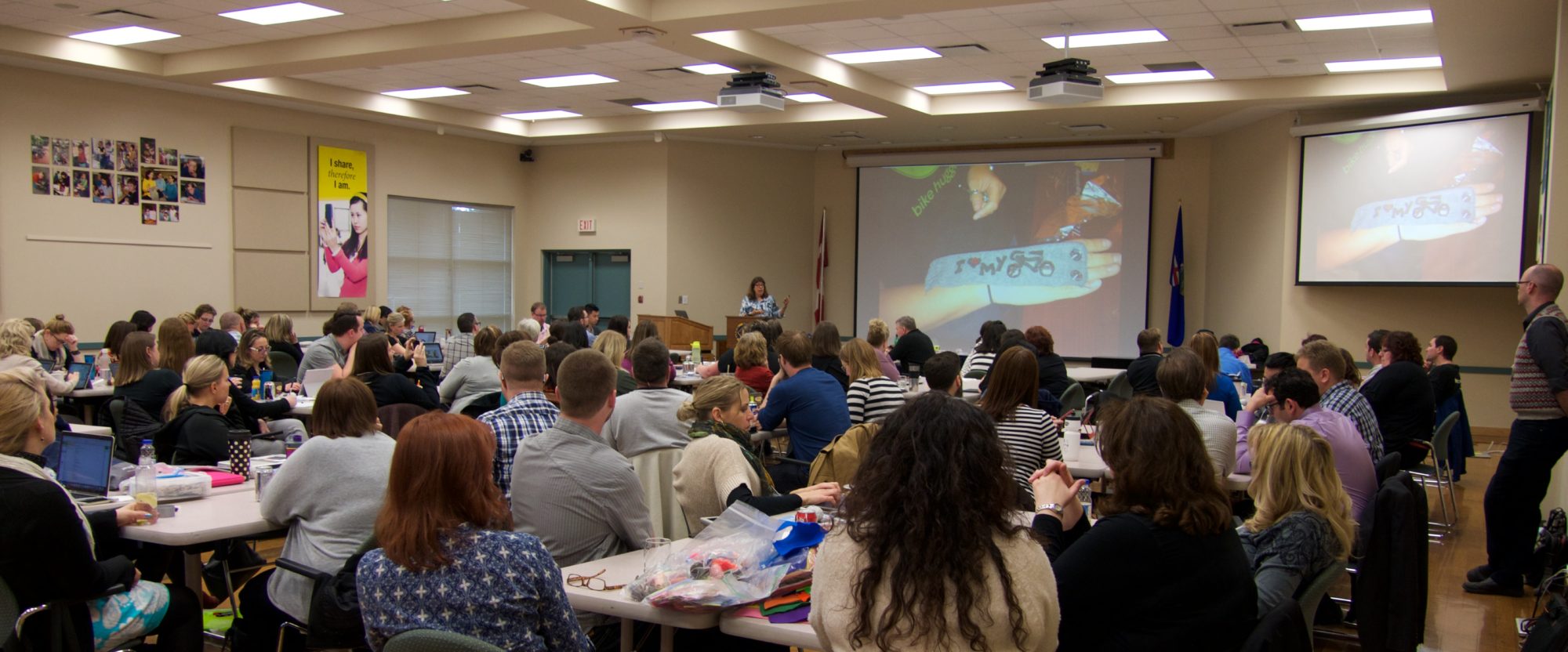
 To help, I’ve written a how-to guide about taking students to conferences. It’s called, Sharing Student Voice: Students Presenting at Conferences. The focus is on making it an enriching experience for students AND also meeting the needs of the adult audience. It starts with how to propose sessions with students, goes through planning and preparation, and includes a handy Top 10 Tips for student presentations.
 For three days this summer, science teachers from 12 Brooklyn middle schools came together to plan an innovative program combining science, engineering and technology. With our
 Games that assess number sense
 We’ve all heard calls for various kinds of open curriculum wikis. Districts, states and foundations are designing portals, wikis and other online databases so that educators can upload their lesson plans and activities, learning modules, or other bits and pieces of what they do in their classrooms. The idea is that as more educators upload content, the collection becomes a free, shareable curriculum.
 Because their own professional flame was rekindled in this way, they assume that all other teachers must have a similar experience to follow in that path. To me, however, professional development that requires a personal transformative experience seems unscalable.
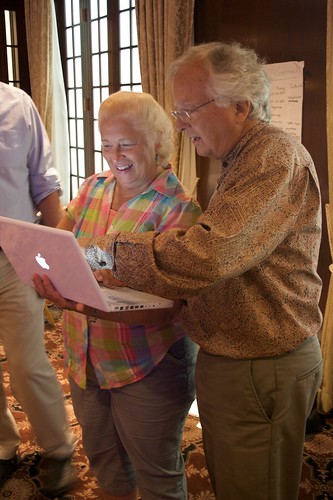 It’s been two weeks since the
  How to structure a day with enough time for working on projects, learning new things, collegial interaction, and sleep. The man in charge, Gary Stager, has had plenty of experience planning these events, but I’ve had almost none. So listening to him talk about how this could work, drawing on 25 years of experience was informative. I learned a lot before the event even started. In the end, each day consisted of a short opening framework from Gary, one guest speaker, and the rest of the time spent working on individual and group projects. Plus evening social events!
 classics to books that are great for classrooms and students.
  Once we got to the hotel to set up, we found 10 more boxes. Several companies had donated constructive, creative software and materials for our participants.
  Sunday excursion
 Monday morning started the institute. Everyone started to arrive and settle down, install new software and meeting and greeting. The introductions were amazing. People had come from all over the country, and two from Israel and Khartoum. We had kindergarten to high school teachers, math, science, art, administrators, public and private schools, tech coordinators, district — just about every combination of educators you could imagine. After some opening words, we brainstormed some ideas for projects – dancing clowns, musical sculptures, a video or simulation about the immigrant experience, a boat, a kaleidoscope and more. Then people grouped themselves on a project. My job was to float around and facilitate, connect people with resources, open boxes of stuff, find clay or eyeballs or pipe cleaners or debug programs or whatever.
 Some groups took off right away. I spent a lot of time with a group doing a video using the Claymation kit and the Frames animation software. We set up the green screen and brainstormed ideas. Some of the ideas worked, some didn’t, and when we did a test with the software, we had our first AHA moment. Working with our test pictures and the software lead to another, wholly unexpected discovery and that lead to an even better idea. Our story took on a new and different shape before our eyes because we allowed it to and we had time. If we had rigidly stuck to the original plan and schedule, it wouldn’t have happened.
 Someone started making turtles out of the clay. Why turtles? Not really sure how that happened. But suddenly they were the stars of the movie. Somebody said, “it’s hard to line the turtles up to the previous frame” and someone pointed to the onion-skinning button, and that knowledge was passed quickly around the table. Then someone else sat down with one of the keyboards and composed a song to go along with the movie. We didn’t have to sit through workshops on music software, frame animation techniques, or turtle carving. The idea of “collaboration through the air” that Gary had talked about that morning had just happened.
 But I wasn’t supposed to just help one group! So I walked around and asked people what they were working on. Two or three groups were going strong. But I found some people just “playing” with software. Hmm…. that wasn’t supposed to happen, where were their groups? One of the groups had disbanded, some were sitting at the same table, but not working on the same thing. So, I asked our fearless leader, Gary, what to do – should I try to get people working in groups? No, he says, let people approach things in their own way. Offer them help but let them decide to participate. So although this is against my A-type to-do list mentality, I have to trust him.
 pictures and videos about their re-creation of this sculpture.
 Each day ended with a circle where everyone could wrap up their impressions of the day. Typically I’m leery of anything that smacks of touchy-feely kumbayah theatrics. But it was important to bring the meta-analysis back to the day. People had allowed themselves to take their “teacher hats” off for a time, now it was time to step back and think about the meaning behind what was happening to them as learners and what it meant for how they might change their own management of student learning environments. More than a few people expressed how uncomfortable it felt to be “thrown off the deep end” and told to JUST DO something. But then almost all said that the feeling of moving past that discomfort and frustration was meaningful and necessary. Gary had mentioned watching for this “mouth-up frustration” as a good sign. But what’s the right balance of frustration and hand-holding? Obviously, in this group, there were as many answers as there were personalities. What does this imply for students?
 Hot off the presses – but online for your enjoyment!